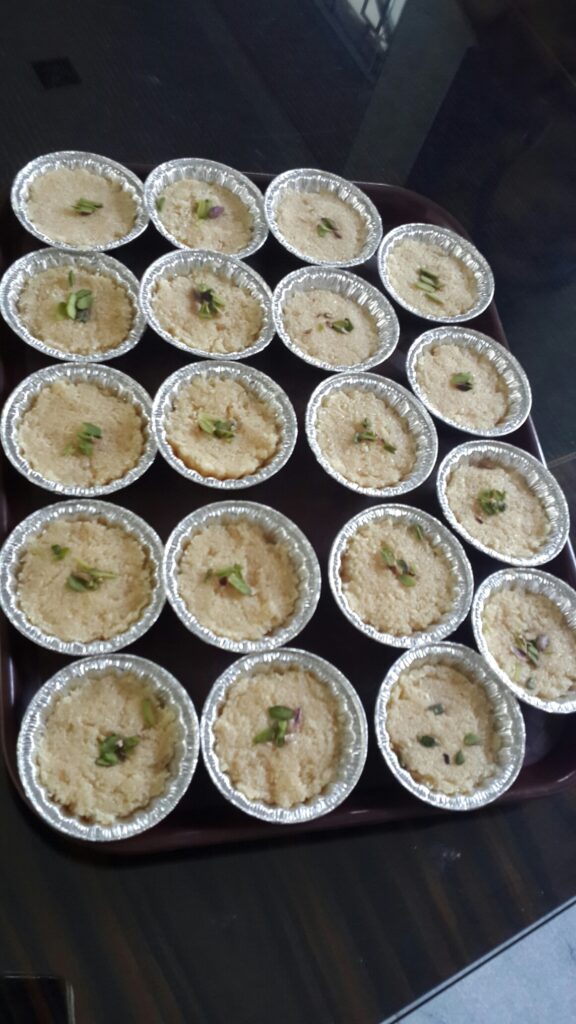
Call it semolina, sooji, rawa, or cream of wheat, this is an important must-have in almost all Indian pantries and even in the Middle East. Be it savoury or sweet, most Indian families will dish out delicious meals made of sooji. Upma, a savoury dish, calls for different ingredients depending on which region it is coming from, but the end result is almost always a creamy, silken, semi-porridge-like consistency, easy on the stomach. In Maharashtra it includes potatoes, carrots, and beans and is normally served with sweet curd and is part of naashta (breakfast), whereas in the South it is served with a spicy sambhar and coconut chutney and is served as tiffin. Any which way, upma is relished throughout India. Another popular dish made out of sooji is the rawa dosa, available in most Udupi restaurants all over India. This dosa brings back memories of another day, when we, as young children, used to accompany our parents to the Sai Baba temple at Swargate, Pune. Not very far from the temple was this restaurant called Triveni, the pioneer in serving this crisp dosa in Pune, way back in the 1970s. This crisp dosa (crepe), sprinkled with chopped green chillies and chopped onions, served with cold coconut chutney and sambar, was our weekly treat most Sundays. Beautiful memories. Anyone who has lived in Maharashtra and who has seen and been a part of the Ganpati Utsav will definitely vouch for the melt-in-your-mouth sooji prasad that is distributed along with modaks at all the beautifully decorated stalls. My earliest memory of having this amazing prasad is of having it every year at my mamaji’s shop, Deluxe Decorators, where the Ganesh idol was kept for 11 days and then taken for immersion at Bund Garden. I remember a Maharashtrian lady making it, and when this huge pot was opened after the aarti for distribution, the aroma was mouth watering. Today I share with you this recipe, which is a favourite with my children. Sooji Halwa, Prasad Ingredients Method Truly ambrosia, or food for the gods.