Dessert

Dessert

The Royal Touch – Shahi Tukde

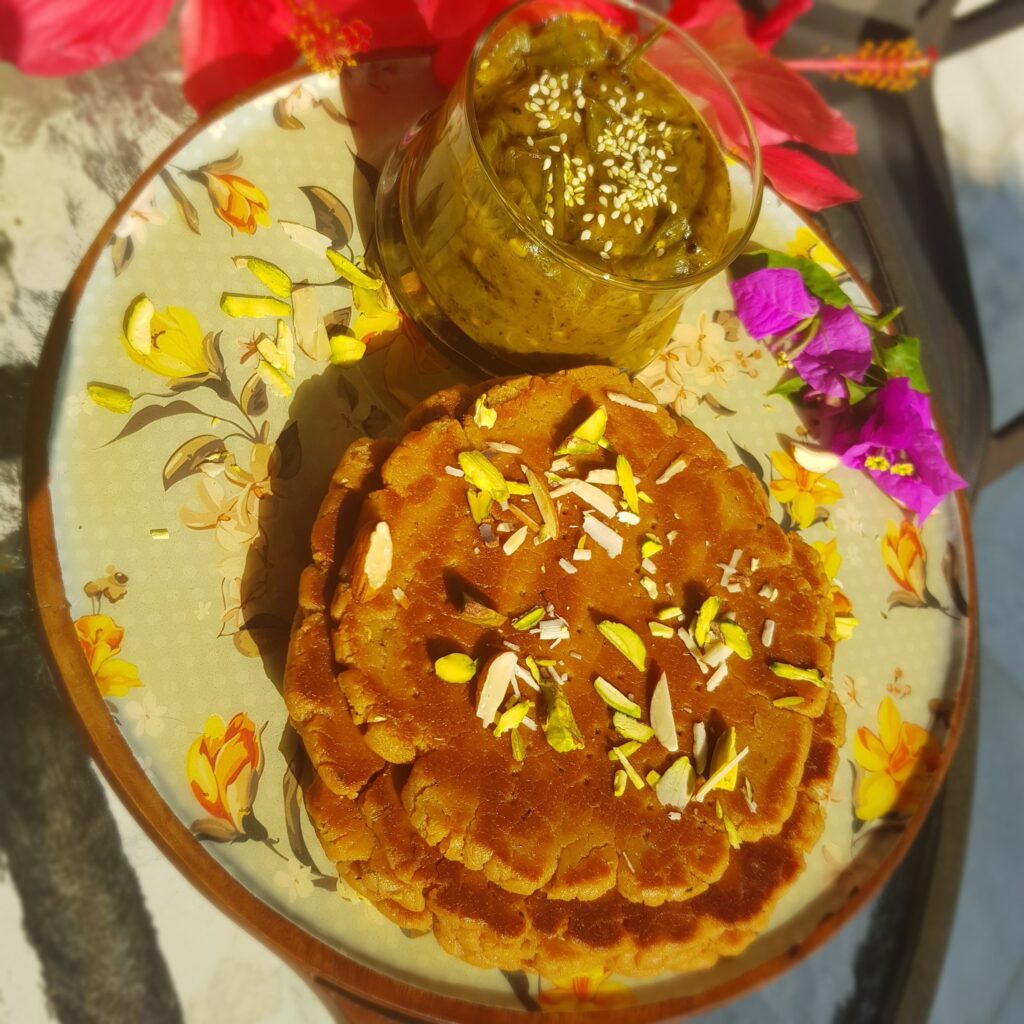
Any Indian food lover, especially those who have a sweet tooth, will have definitely tasted this amazing dessert at some point in their lives. This sinfully rich dish has paved its way down the Mughal era, with its route passing through the courts of the nawabs and royal households too, which is why it has an important place in wedding menus and is also very popular during the Ramzan festival, second only to the amazing sheer khurma. This elaborate-looking dish is actually very simple to make, needing just a few ingredients. Many families have their own version of this dish. Some serve it chilled, some at room temperature. Even the way it is served varies from region to region. The Hyderabadi people call it Double Ka Meetha, because of a type of milk bread that they use which literally swells to double its volume when soaked. The bread is always fried first till golden and then soaked in a warm saffron syrup. Once the bread slightly softens up, it is topped with a rich rabri and nuts. This wonderful marriage of flavours, which is a sheer delight in gastronomy, is India’s delicious answer to the bread pudding of the Western world. The simpler Sindhi version of this dessert is known as chash ji dabroti. It was a standard once-a-week dish in our home during winters, which my mom made on most Saturdays. Basically the bread was fried until golden, then dunked in a warm sugar syrup flavoured with saffron and cardamoms. My grandmother, Amma, loved this dish so much that she always asked for second helpings, with me not far behind. The Sindhi version does not include rabri. Today I will share with you my version of the recipe. Enjoy it, though this rich dessert will make calorie-conscious people think twice. Do try a small portion. Shahi Tukde Ingredients for the Rabri Method to Make Rabri Ingredients for Sugar Syrup Method Ingredients for the Bread Base Method to Fry and Assemble

Dessert

Instant Mango sandesh

The Bengal connection has been a strong one in my life. Having loved Bengali sweets since a very young age, I can never resist a malai rasgulla sandwich or a syrupy cham cham. And how about that spongy rasgulla? And who does not know about the sandesh? This easy-to-make sweet is very popular and comes in many flavours like kesar, mango, pistachio, etc. It is due to the influence of Karachi Sweet Mart, Pune, in my life. The owner’s wife was my mom’s best friend, and these treats were very often on our table. This kind aunty would never lose an opportunity to send us sweets. Very often the doorbell would ring and we were handed a packet of cold rasmalais which were so soft that they literally melted in your mouth. These rasmalais were dunked in a saffron-infused sweet milk base. Oh, how we relished these delicious sweet treats. Even today, on all my visits to India, I still head straight to the Karachi Sweet Mart to buy their Bengali sweets. Bengali sweets are no doubt on the sweeter side of life, but they are lighter than most Indian sweets because they are paneer or cottage cheese based, chenna as it is called by Bengalis. Another plus point being the absence of ghee or oil. Today I will share with you a very simple instant sandesh which makes use of condensed milk and is made in a jiffy. You can substitute the mango essence with soaked and ground saffron or use any other flavouring. This sandesh is best had cold. It also keeps up to a week in the refrigerator. Do try it out. Instant Mango Sandesh Ingredients Method

Dessert

The Rain Trail

What is it about the rains which uplifts my mood and makes my heart go pitter patter? For me, rains are soothing, always making me want to just sit in my garden and gaze into the beautiful grey skies. Growing up in India, we eagerly waited for the rainy season to start in June, especially after the immense dry heat of summers in Pune. The grey skies were and still are a very welcoming sight for me, the drum of thunder rolling in the distance and the blaze of lightning streaking the sky bright. Rains brought with them puddles in which we sailed paper boats. It was the season when raincoats and rubber rainy shoes were worn to school. Later on in my teenage years, rains were an excellent excuse to go cycling in the back lanes of Camp, all military areas dotted with quaint cottages of the bygone British rule. Beautiful roads of Pune coloured green because of the rains, the banyan trees which are the pride of Pune lining both sides of these roads. It was pure bliss to cycle down these winding lanes, especially with my best friend Patricia. I have beautiful memories of these cycle rides when getting soaked to the skin added to our carefree and fun loving lives. Rains are an opportunity to eat hot comfort food. Being Indian, for us that probably means piping hot pakodas, garam garam chai, melt-in-your-mouth seeras and halwas, and not forgetting the hot corn on the cob available on most streets in India. It is quite a common and welcoming sight to see the corn vendor busy roasting sweet corn on the cob or bhutta and generously applying fresh lime halves which are dunked in red chilli powder and salt all over the hot charcoal roasted bhutta. Yummm. Luckily for me, I live in Jakarta, Indonesia, which means six months of the year we get rains. For me that is good, but there are many who would beg to differ, especially those whose homes are flooded yearly. Sadly that is the reality of the other side of the coin. Today I will share with you a recipe of moong dal halwa, a sinful, mouthwatering delicacy which is best eaten on a cold rainy day, and listening to your favourite Bollywood songs. Moong Dal Halwa Ingredients Method

Dessert

The Semolina Trail

Call it semolina, sooji, rawa, or cream of wheat, this is an important must-have in almost all Indian pantries and even in the Middle East. Be it savoury or sweet, most Indian families will dish out delicious meals made of sooji. Upma, a savoury dish, calls for different ingredients depending on which region it is coming from, but the end result is almost always a creamy, silken, semi-porridge-like consistency, easy on the stomach. In Maharashtra it includes potatoes, carrots, and beans and is normally served with sweet curd and is part of naashta (breakfast), whereas in the South it is served with a spicy sambhar and coconut chutney and is served as tiffin. Any which way, upma is relished throughout India. Another popular dish made out of sooji is the rawa dosa, available in most Udupi restaurants all over India. This dosa brings back memories of another day, when we, as young children, used to accompany our parents to the Sai Baba temple at Swargate, Pune. Not very far from the temple was this restaurant called Triveni, the pioneer in serving this crisp dosa in Pune, way back in the 1970s. This crisp dosa (crepe), sprinkled with chopped green chillies and chopped onions, served with cold coconut chutney and sambar, was our weekly treat most Sundays. Beautiful memories. Anyone who has lived in Maharashtra and who has seen and been a part of the Ganpati Utsav will definitely vouch for the melt-in-your-mouth sooji prasad that is distributed along with modaks at all the beautifully decorated stalls. My earliest memory of having this amazing prasad is of having it every year at my mamaji’s shop, Deluxe Decorators, where the Ganesh idol was kept for 11 days and then taken for immersion at Bund Garden. I remember a Maharashtrian lady making it, and when this huge pot was opened after the aarti for distribution, the aroma was mouth watering. Today I share with you this recipe, which is a favourite with my children. Sooji Halwa, Prasad Ingredients Method Truly ambrosia, or food for the gods.

Dessert

Coconut…

This amazing nut, the king of all nuts, but oh so versatile. Millions of recipes are based on coconut, from the humble chutney to delicate payasams, all over coastal India right up to South East Asia. Be it savoury or sweet, coconut is a must in many forms. But one memory stands out clear. The coconut mithai made out of desiccated coconut. As children, when we lived in Agarwal Colony, there was this lovely old couple in our building, the Sakhranis, who had a daughter living in Sri Lanka, and she used to send desiccated coconut from there. Aunty Sakhrani always sent it to my mom and requested her to make the barfi, and always very kindly told her to keep half of it. Mom made this barfi with only sugar made into chasni and the coconut with some kesar, and the amazing fragrance of saffron chasni simmering on the stove was divine, and so was the barfi. It made me a lifelong fan of anything to do with coconut. The credit for this recipe partly goes to a close friend, whose basic recipe has been given a twist by me. Do try it out. Its simplicity is the secret behind this yummy mithai. Coconut Barfi Ingredients Method

Scroll to Top