Author name: ratisfusionkitchen

Snacks

The Dhokla Quest

Ever since I can remember, I have loved dhoklas, the lovely low-calorie snack which rules Gujarat and also many parts of Western India. It is available in almost all sweetmeat shops, especially those run by Gujaratis or Marwaris. This snack, which is steamed and then tempered with mustard seeds and sesame seeds, is delightfully soft and fluffy when made right. Oh, the pleasure of biting into a piece of freshly made dhokla topped with a cold coconut chutney, supreme pleasure. And I can tell you that every family guards their dhokla recipe very closely. For years I have tried to make the perfect dhokla and have tried so many recipes, some of which have seen the bin and some of them my table. And just when I think, okay, that is it, this is the perfect recipe, along comes another version which I feel is better than the first. But finally, after many trials and errors, I have found my version of the dhokla, which I am going to stick to for a long time. My version is made from semolina, which I love. I know this would not be what is made in many Gujarati households, where dhoklas are traditionally made with soaked and ground chana dal or besan. But it is an instant version which can be made in a jiffy with just a few ingredients. Do try it. Instant Rawa Dhokla Ingredients Method Tempering

Dessert

The Rain Trail

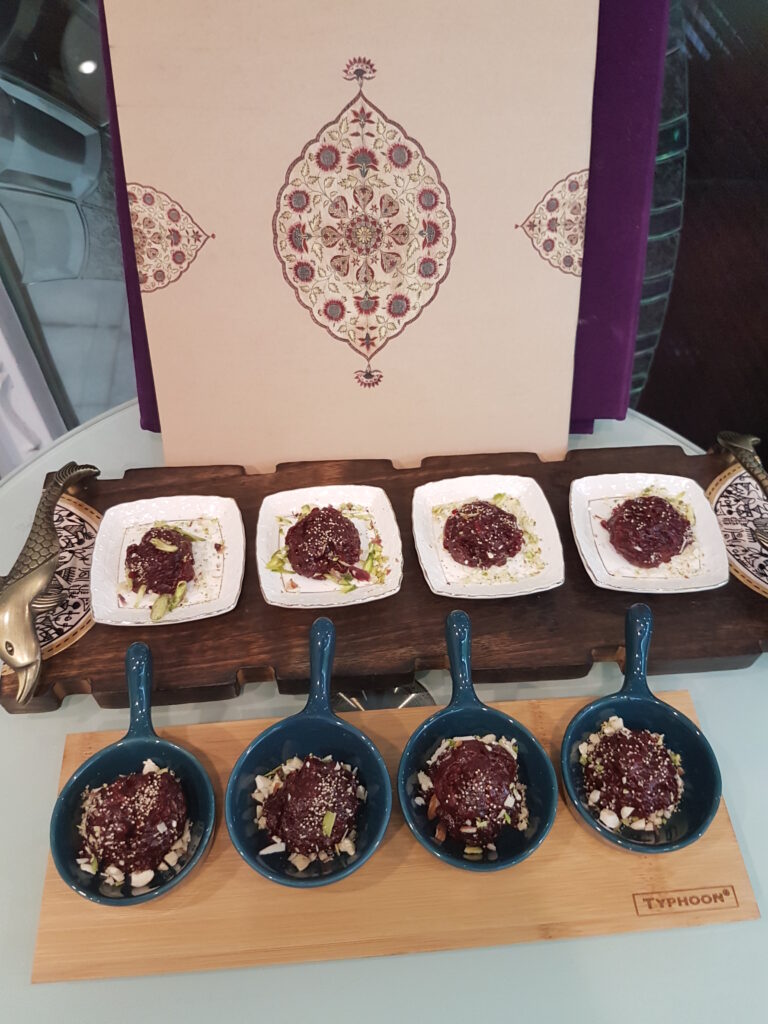
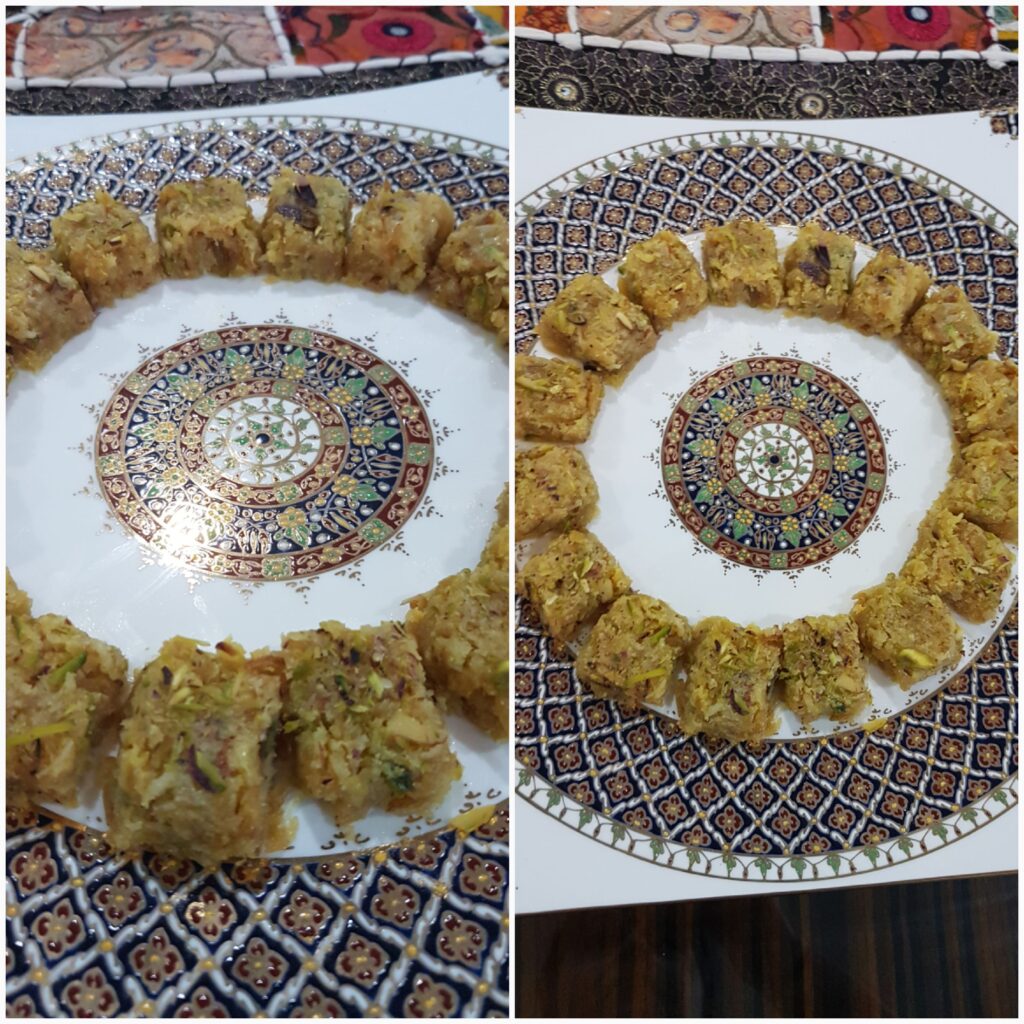
What is it about the rains which uplifts my mood and makes my heart go pitter patter? For me, rains are soothing, always making me want to just sit in my garden and gaze into the beautiful grey skies. Growing up in India, we eagerly waited for the rainy season to start in June, especially after the immense dry heat of summers in Pune. The grey skies were and still are a very welcoming sight for me, the drum of thunder rolling in the distance and the blaze of lightning streaking the sky bright. Rains brought with them puddles in which we sailed paper boats. It was the season when raincoats and rubber rainy shoes were worn to school. Later on in my teenage years, rains were an excellent excuse to go cycling in the back lanes of Camp, all military areas dotted with quaint cottages of the bygone British rule. Beautiful roads of Pune coloured green because of the rains, the banyan trees which are the pride of Pune lining both sides of these roads. It was pure bliss to cycle down these winding lanes, especially with my best friend Patricia. I have beautiful memories of these cycle rides when getting soaked to the skin added to our carefree and fun loving lives. Rains are an opportunity to eat hot comfort food. Being Indian, for us that probably means piping hot pakodas, garam garam chai, melt-in-your-mouth seeras and halwas, and not forgetting the hot corn on the cob available on most streets in India. It is quite a common and welcoming sight to see the corn vendor busy roasting sweet corn on the cob or bhutta and generously applying fresh lime halves which are dunked in red chilli powder and salt all over the hot charcoal roasted bhutta. Yummm. Luckily for me, I live in Jakarta, Indonesia, which means six months of the year we get rains. For me that is good, but there are many who would beg to differ, especially those whose homes are flooded yearly. Sadly that is the reality of the other side of the coin. Today I will share with you a recipe of moong dal halwa, a sinful, mouthwatering delicacy which is best eaten on a cold rainy day, and listening to your favourite Bollywood songs. Moong Dal Halwa Ingredients Method

Dessert, Snacks

GOLDEN PINEAPPLE TARTS/NASTAR NANAS

Nastar Nanas are delicate, melt-in-the-mouth Indonesian pineapple tarts traditionally gifted during festive seasons. This recipe guides you through making the spiced pineapple jam filling and the fragrant, buttery pastry for a perfect bite-sized treat.

Snacks

Snack Time

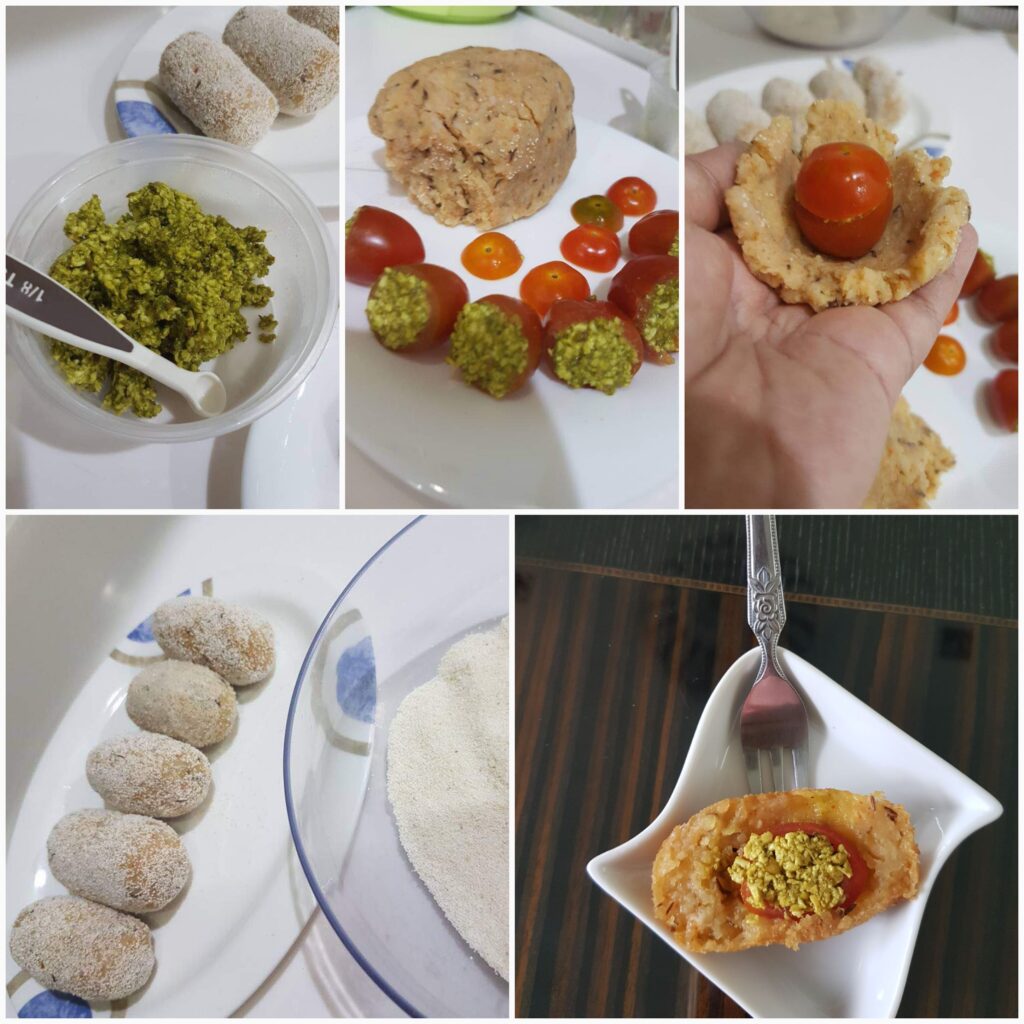
  Snacks are an all-time favourite with everyone. We all feel these hunger pangs in between meals. Of course nowadays the trend is to snack healthy and we are advised to eat nuts, fruits, and energy bars in lieu of farsans, fried snacks, and sweets. But truthfully, who does not like biting into a hot crisp samosa which has been dunked into a spicy mint chutney or a tangy tomato chilli sauce? Or even a simple fried potato tikki which is so crispy on the outside and soft on the inside? I must confess, I cannot resist fried snacks. I would rather eat a fried tikki once in a way rather than a pan fried one ever so often. But with all due respect, not all snacks are fried, and many non-fried snacks taste equally delicious. Gujarat, for instance, has given us many steamed wonders such as the different varieties of dhoklas, my personal favourite, the melt-in-your-mouth khandvis, the methi muthiyas, etc. Heading south, you get a mixed variety, the steamed idiyappams, idlis, or the crisp medhu wadas. Maharashtra is the state where I was born, and what should I say about our Maharashtrian snacks, I could go on and on. Sabudana wadas, kothimbir vadis, bhakarwadi, and who has not heard of the famous vada pav? Crispy besan-coated spicy potato balls, deep fried and served between a slit pav with generous lashings of garlic and chilli chutney. This street food is one of the most popular snack items sold on the streets. Its price suits all pockets, from the poor man to college students and to the rich who arrive in their Mercedes to buy it. It is also called the poor man’s burger. As young children, snacking was sometimes as simple as a slice of bread with jam on it or even some butter and bread, and then we were off running to meet our friends to play hopscotch or hide and seek. Those were the carefree days of childhood. One memory that stands out is coming home from school to the pungent smell of green chutney being ground on the stone slab by our old helper Girgabai. The fragrance of mint, coriander leaves, and spicy green chillies literally filled the house once a week because Baba loved his chutney to be made in the old-fashioned way. He really enjoyed eating his chutney dabroti, bread as it is called in Sindhi. Today I would like to share with you a snack which I learnt in my cooking group, the Fun and Food Ladies Group, of which I am privileged to be a member. For almost 25 years, this wonderful group has been active in Jakarta for almost 40 years and has members of all age groups. We gather monthly at different members’ homes and we share recipes and host lunches. Today I can truly say that over the years I have learnt a lot of cooking and many other things from the ladies in this group, all of whom are now dear friends. The Sandwich Ball Ingredients Method

Snacks

The Bakery Trail

Biscuits. Rare is the person who has not eaten biscuits, sweet, salty, or spicy. There are thousands of varieties of biscuits or cookies all over the world. Each country has its own speciality, be it shortbreads, butter cookies, or sandwich cookies, and the list is endless. Growing up in Pune, our biscuits and cakes were from the famous Parsi bakeries which Pune is famous for, namely Kayani Bakery, Royal Bakery, and Pasteur Bakery, to name a few. These bakeries sell biscuits and cakes with recipes which are handed down over generations, and the best part is that over the years the taste and quality remains the same. Anyone who has been to Pune will vouch for the melt-in-your-mouth Shrewsbury biscuits of Kayani Bakery or the cheese papadi, and not forgetting the khari puff biscuits. It is no wonder that their cakes, biscuits, and breads are sold out even as they are made. Each bakery has its speciality which loyal customers keep going back for. I remember how Baba wanted bread only from Royal Bakery, and mummy used to tell me to go pick it up, and me cutting across Bhimpura Lane to buy the bread happily because it gave me a chance to go to my favourite library, the Punjab Library, where the owner, Uncle Manguram, had the most fabulous collection of Mills and Boon books and comics. Royal Bakery also had the most amazing glass cakes, so called because of their shape. These buttery milky cakes were super soft. Pune in the 1970s had some pretty well known bakeries, many of them still around even today. Sadly some have shut down, like the Sham Sunder Bakery, where nankhatais were really delicious. Those were the good old days. I am not too much into baking, but recently my son Sagar encouraged me to start baking cookies, and so began the search for some of my old recipes for cookies. Today I share with you a recipe for coconut cookies. These remain crisp for a long time due to the pure butter used. Coconut Cookies Ingredients Method If you like a slightly chewy texture, then do not flatten the cookies.

Main Meal

The Sindhi Kitchen

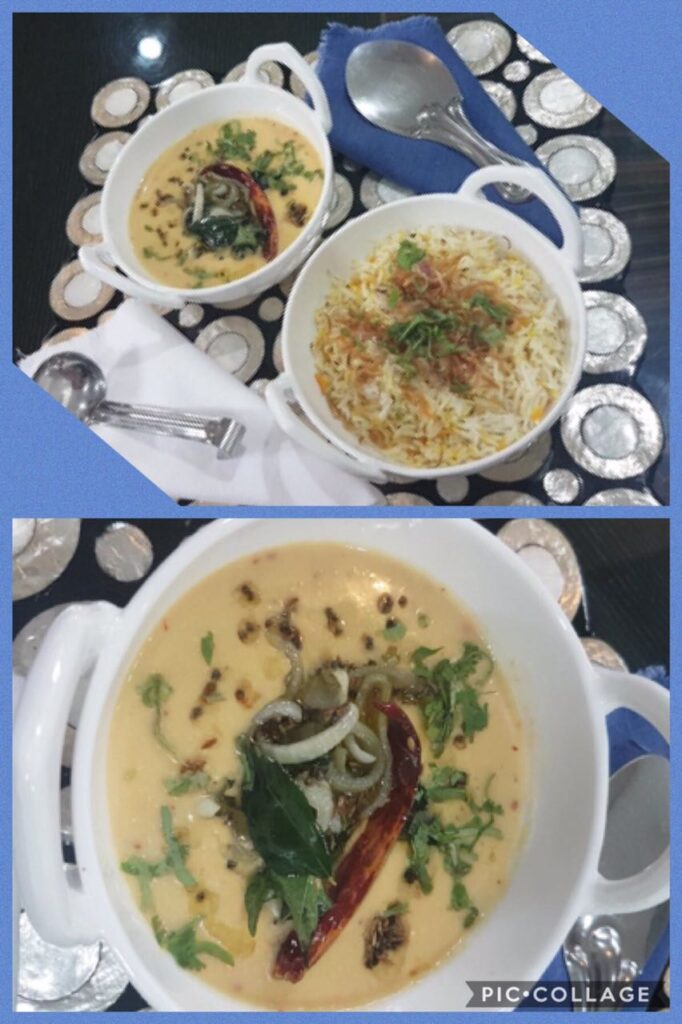
The first thing that normally comes to the mind of a non-Sindhi would be Sindhi kadhi when they hear the word Sindhi kitchen. Yes, no doubt about it that the Sindhi kadhi is so delicious that its fame has really spread. This delicious kadhi, accompanied by crisp potato tuk and meethi boondhi, is a scrumptious meal which is normally had on lazy Sundays for lunch, because it leaves you feeling so satiated that you just need to have that lethargic nap (do we really need that excuse to nap?.. hmmmm…). Sindhi cuisine has its influences from varied cultures, and what comes across is that this delicious food actually is quite simple to cook and needs few basic ingredients generally, which leaves people rather surprised and asking “is that all?” In my kitchen I do not cook Sindhi food very often since my cooking has been influenced by regional cooking of India. My food will generally have the Maharashtrian or Bengali or Southern Indian touch. But when I do cook Sindhi food then definitely it will be proper Sindhi, be it a pulao, saibhaji and jeeri aaloo combination or khichdi, methi aloo and curd, or even bhugal chicken and phulka, not forgetting the delicious spicy seyal mani and bread and the yummy loli or koki, or even dal pakwan which my children love. Sindhi food can be as simple as eating khichdi, fried potatoes and mango slices accompanied by fried khecri or murukus. I remember many a warm summer night when my mom served just this to us and we ate it with relish. Did we even once think that this was almost a full carbohydrate meal? No, not at all. Those were the good old days. Sindhi food has a good non-vegetarian variety also. In days bygone it was fish and mutton which were an important part of the Sindhi cuisine. Chicken has only gained popularity in Sindhi households in recent years. My late mother-in-law used to make the best methi machhi ever. We literally used to lick our fingers when we ate it with a hot phulka. Ah well, food well cooked is food cooked with love. I can go on and on about the various dishes which are part of the Sindhi heritage, but today I will share my Sindhi fusion mutton curry recipe with you. Early memories of eating mutton bhugal, or teevarn as it is called in Sindhi, was when my mother made teevarn bhugal or daag mein teevarn (onion based) once a week, normally on Saturdays or Sundays for lunch. My parents were vegetarian, but mom made it for my grandfather and us. Baba, my grandfather, would request our neighbours, the Sakhranis or Chuganis, to buy the teevarn because my mother refused to step into the mutton market. For Baba, eating teevarn had to go hand in hand with a peg of whiskey or Sindhi daaru (country liquor or gin which is infused with fruit peels, pepper, rock candy, saffron and other wonderful ingredients). Sometimes when special guests were called home for dinner, mom would send me to buy kebabs and bheja fry from this quaint Sindhi restaurant called Dil-Kush restaurant, which was situated not far from Agarwal Colony where we lived, at the corner of Babajan Chowk. The kebabs were to die for. Memories of those kebabs still make my mouth water, served with onion kechumbo (sliced onions with lime and salt). This old uncle owner wrapped the food in dried leaves and then with newspaper, very eco-friendly even then. But then, those were the good old days when plastic usage was minimum. Sadly, this restaurant shut down in the early 1980s. The recipe which I will share now is usually the base for Sindhi pawa (trotters, or paya) but I cook my mutton using this recipe of my mother. It is easy enough to follow. SINDHI TEEVARN Take a square piece of muslin cloth, about the size of a man’s handkerchief, and put these spices onto it: Tie this into a secure potli and make a bouquet garni. Put this packet of spices into a pressure cooker. Add half kg boneless mutton cubes and half kg mutton with bone into the cooker. Add sufficient water and close the lid. Cook for about 8 whistles on medium flame. Remove the bouquet garni, open it gently, and put the spices into a mixer and blend using about one cup of water. Strain this spice water and keep aside. Now take a pot. Add about 4 to 5 tbsps of oil and add 3 finely chopped onions. Sauté until onions turn pale golden in colour. Add shah jeera or caraway seeds to the onions.Add 2 tbsps of ginger garlic paste and continue sautéing.Now add 2 sliced tomatoes and puree of 2 boiled tomatoes. Continue sautéing till everything comes together and then add dry spices like turmeric, red chilli powder, coriander powder and lastly the king of all masalas, garam masala. Season with salt. Now is the time to add the boiled mutton together with the stock. Mix well and let it cook covered for 10 minutes, then add the strained spice mixture little by little, using as required. About 3/4 cup should be fine. Cover once again and simmer till your kitchen is engulfed with the fragrance, about 15 minutes on a low flame. Adjust the thickness of the gravy. It should be semi-thick and slightly sticky due to the starch in the rice. Finally add lots of chopped coriander leaves, stir and serve hot with phulkas or bread slices and some Sindhi kechumbo. Kechumbo Rub some salt onto 2 sliced onions and leave for 5 minutes, then wash under running water. Squeeze the water out and put the onions in a bowl. Now add 2 sliced green chillies, 1 tsp salt, 1 tsp sugar and 1 tsp vinegar. Mix well and refrigerate. I even add grated boiled beetroot and grated carrot to my kechumbo. For vegetarians I would suggest making lotus stem and potatoes,

Dessert

The Semolina Trail

Call it semolina, sooji, rawa, or cream of wheat, this is an important must-have in almost all Indian pantries and even in the Middle East. Be it savoury or sweet, most Indian families will dish out delicious meals made of sooji. Upma, a savoury dish, calls for different ingredients depending on which region it is coming from, but the end result is almost always a creamy, silken, semi-porridge-like consistency, easy on the stomach. In Maharashtra it includes potatoes, carrots, and beans and is normally served with sweet curd and is part of naashta (breakfast), whereas in the South it is served with a spicy sambhar and coconut chutney and is served as tiffin. Any which way, upma is relished throughout India. Another popular dish made out of sooji is the rawa dosa, available in most Udupi restaurants all over India. This dosa brings back memories of another day, when we, as young children, used to accompany our parents to the Sai Baba temple at Swargate, Pune. Not very far from the temple was this restaurant called Triveni, the pioneer in serving this crisp dosa in Pune, way back in the 1970s. This crisp dosa (crepe), sprinkled with chopped green chillies and chopped onions, served with cold coconut chutney and sambar, was our weekly treat most Sundays. Beautiful memories. Anyone who has lived in Maharashtra and who has seen and been a part of the Ganpati Utsav will definitely vouch for the melt-in-your-mouth sooji prasad that is distributed along with modaks at all the beautifully decorated stalls. My earliest memory of having this amazing prasad is of having it every year at my mamaji’s shop, Deluxe Decorators, where the Ganesh idol was kept for 11 days and then taken for immersion at Bund Garden. I remember a Maharashtrian lady making it, and when this huge pot was opened after the aarti for distribution, the aroma was mouth watering. Today I share with you this recipe, which is a favourite with my children. Sooji Halwa, Prasad Ingredients Method Truly ambrosia, or food for the gods.

Life

The love of gardening

How is it that something is right under your nose and you just take it for granted? That’s my story. For 21 years it was my husband who looked after our garden, with me just admiring it… from afar 🙂 And suddenly, the love and memory of one particular flower which bloomed abundantly in my nani’s house… the Raat Ki Rani, botanical name Cestrum nocturnum… awoke the sleeping gardener in me. I suppose it was memories of me, at a very young age, going to visit nani at Kanya Shala Road with my mom and staying till sundown, when these magical flowers let out a heady fragrance… a beautiful childhood memory! And the quest for this beautiful plant took me all over Google land. Bringing in a live plant from India was of course out of the question, since that is illegal… all I wanted was the seeds. And finally I hit paydirt on eBay… got the seeds from the USA and planted them. While waiting patiently for the sapling to appear, I looked around for herbs, which suddenly seemed to be so easy to grow… and so started my love for gardening. The immense pleasure of nurturing, loving a plant, watching it grow from seed to sapling to a plant which gives back the love by blooming into wonderful fragrant flowers is something so beautiful… it makes one thankful for bountiful nature. The past four years have seen me build a small terrace garden with my favourite plants… herbs, roses, parijat, kemuning, jasmine, manaca, raat ki rani, to name a few. It’s my private space… not intruding in the landscaped garden in our home, which is my husband’s love.

Scroll to Top